Building Is Hard
I live in a house built in 1921. It’s creaky and grand and the windows are terrible at keeping heat inside. According to plans we found in our town library, it was once used as a dental office. The garage seems to have been home to horses at some point. And now it’s home to me, my partner, my two kids, and my mom and dad.
It’s humbling, to buy a hundred-year-old house. To realize that you are just one in a string of care-takers, and very likely, when you are gone, there will be a string of people after you. This house is my whole life for the next thirty years, the apex of my societally-approved achievement, but I am a relatively small part of the house’s life. I see myself as a temporary steward of this space, despite the fact that I “own” it according to a bank.
Earlier this fall, we cut down several trees, knocked down the garage, and began construction on a new garage and an ADU (accessory dwelling unit) for my parents. My parents sold their house, moved in with us, and are using the proceeds from the house sale to fund this new home for them, right in our back yard.
They poured the concrete slab this morning. Everything getting to this point has been hard.
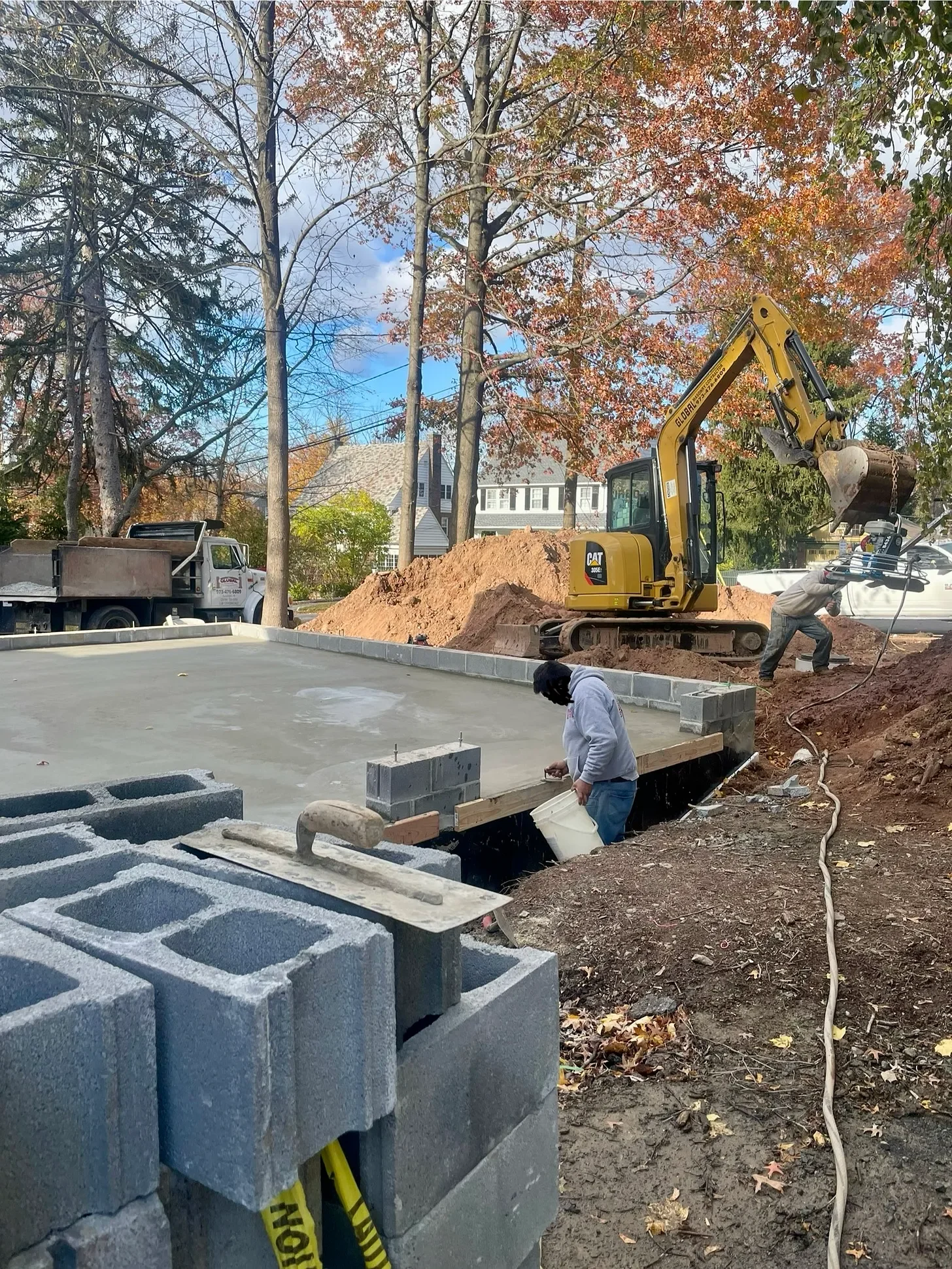
Slab, my beautiful slab!
The whole venture began as a pipe dream of mine. We have a huge side yard that serves no purpose, and as soon as we bought the house I started thinking about how much better it would be if there was more housing there. Then my dad fell down the stairs at my parents’ house, and I started to put two ideas together. What if they lived in a house next to our house?
I pitched this to them, and after a year or so of thinking it over, they agreed! I was very surprised, as this would entail a lot of headache and change for them, but it’s amazing what the appeal of grandkids can do.
Then the logistics began. We employed an architect to make hundreds of decisions about what this new small house would look like. Then we had to figure out how to make our vision work within the confines of what the town allowed. Then began the long and arduous permitting process. We had to cut down some trees, and have spent an embarrassing amount of money to save one particularly special tree on our property. I couldn’t be a good steward of the house and let them cut this one down. And now, the construction has started. Our manicured suburban lawn is a big pile of dirt with concrete and machines.
It’s startling. It’s…violent. They’re ripping up our space and driving trucks over where trees used to be.
I want this to happen very much. I have wanted this for a very long time. It really should just be a pleasure for me to watch as each step of my dream gets closer to being true.
And yet…at every stage, I’ve found my stomach tied in knots, and I think everyone involved feels the same way, even though it’s something we all really, really want. Thoughts that roll through my head: are we ruining the history of our house by making this massive change? Is cutting down trees worth a new building for humans? Will I regret having this new giant responsibility on an already overwhelmingly large and old house? Are our architects and contractors sure that they know what they are doing? What if, despite our careful reference checks, they are charlatans and liars? What if we unearth a burial ground and are cursed forever? Will my husband hate this? Will my parents hate this? Did I force them into this? Will everyone hate me because I made us do this? Am I ruining everything?
It’s the same anxiety rolling around over and over again, and it all boils down to one thing: KEEP EVERYTHING THE WAY IT IS!!!!!
I recognize this feeling from somewhere else, I’ve realized. From writing. It is so much easier to leave things the way they are. And it is so much easier to not write a book than it is to write one. Just maybe not in the way we usually talk about.
Yes, literally not building the house is easier, and literally not writing a novel is easier. But it’s also easier, spiritually, to not write the novel, too. Once the novel is built, the existence of it in your life makes other things rearrange. You have a novel but no agent. You have a world in your head on paper now that no one is reading. Was it worth it- cutting down all those trees, just to write a novel? What if you’re stuck with a book that wasn’t worth it? Writing a novel changes your life.
But this experience has made me realize in a new way why you have to write the novel despite how hard it is. Because not writing isn’t simply not doing something. It’s actively destructive. Lack of building is entropy. Not doing something is letting things change on their own. It’s letting things rot. Never changing your house doesn’t preserve it. It’s actually letting it slowly fall down. Not writing your book is slowly letting your soul crumble to bits.
It’s worth it to write. We have to build stuff. Not building stuff results in housing crises. Not building stuff results in families not living together, me feeling blue that my mom and dad are a little too far away for them to be fully present in my kid’s lives. Not building stuff means isolating ourselves from each other, relying on infrastructure that no longer works for the types of communities we aspire to create. Not building stuff means leaving people hungry. Not building stuff means everything slowly falls apart. This is the human condition. Creating art is hard and yet we have to do it or die. This is why.
I’ve always imagined writing an essay about why making art is worthwhile, but I’ve never had an actual answer I believe in until we started building this house for my parents.
If you’re not creating the art that lives in your heart, you’re creating space for slow, creeping destruction. Build your structure. Write your book. Shoot the movie yourself. Imagination is the anecdote to fascism. Imagining what could be that doesn’t currently exist is how we fight. Making your creative plans real is resistance. Build something.